
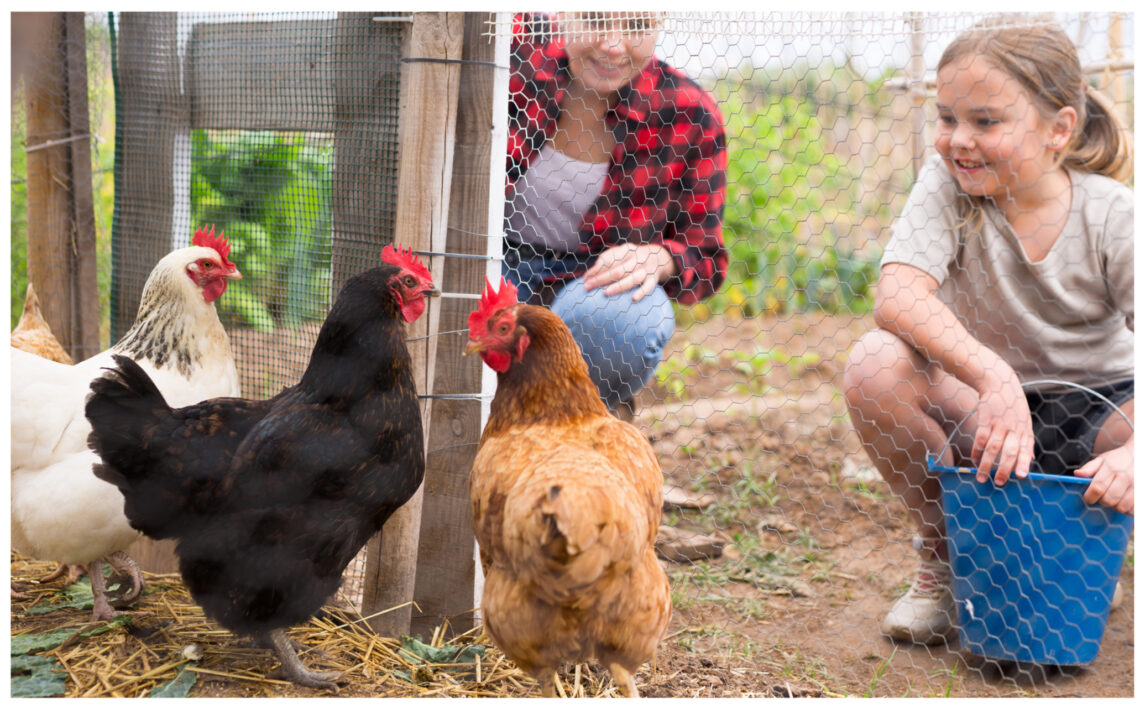

Dinosaurs live among us. Instead of thunderous roars and sharp teeth, these domestic dinos cluck around and enjoy treats, like corn. Ashley Thomas (AT), from the Animal Care Department of the Santa Cruz County Animal Shelter (SCCAS), shares her expertise about raising chickens.
With more than ten years of animal welfare and veterinary care experience, Ashley’s knowledge has led to the formation of her own unique flock. Currently, she has thirteen fantastic fowl friends—twelve hens and one rooster, with half a dozen being adopted from the animal shelter! Since 2021, Ashley has strived to provide her chickens a safe and loving home.
In this interview with Ashley, we cover how important it is to understand the ethics and responsibilities of fowl ownership, including socialization, daily care, safe housing, and veterinary care.
SCCAS: What inspired you to start having hens and a rooster?
AT: I don’t know what inspired me but I have wanted chickens, specifically hens for the longest time. They are fascinating, beautiful creatures and their egg colors are such a treat. Currently, my two hen groups have themed names! One bunch is named after poisonous plants and the other is named after spices. During the pandemic, I got the hens first and much later, I adopted Guapito, a Bantam Mix rooster from the Santa Cruz County Animal Shelter. We merged the two groups and the rooster has done so much for the flock.
SCCAS: What are some personalities you have noticed with your chickens?
AT: Each chicken has their own personality. My chickens are my pets so I’ve watched them grow over time to become their own beings. Guapito the rooster keeps them together and has a protective, watchful eye over the girls. He also feeds them by either picking up delicious food and giving it to the hens or scratching the ground and pointing at the food. He’s a good rooster. My first and adopted hen, Saffron, is very forward and not afraid of anything. Deedee is a nut, Sesame is so sweet with people and bossy with the other chickens, Nutmeg is curious and enjoys citrus, and Paprika loves being held.
SCCAS: What were some unexpected challenges when you first started?
AT: Everything. I researched heavily before getting them since they are a big responsibility. Everything from coop preparedness to chicken illnesses, there is a lot of figuring out as you go. I hold my chicken husbandry to a high standard because they deserve a safe and happy quality of life. There is a lot of maintenance for the coop and chickens. For example, I deworm my chickens, we take them to an avian veterinarian, we thoroughly deep clean the coop two times a year, and we are constantly coming up with ideas for upgrades.
SCCAS: What is the daily routine like?
AT: Ensure that all thirteen chickens have ample water and food, especially during hot weather! We have multiple water sources and feeding stations. Besides chicken scratch, we feed them mealworms and grub, veggies, and crushed eggshells. For their safety, my partner and I let them out to explore and forage only when either both or one of us are home.
SCCAS: How do you protect your chickens from wildlife and harsh weather?
AT: The rooster screams at raptors and other predatory threats. Coop structural integrity is important not just for shelter, it also protects the chickens from disease transmission from rats and birds. Mycoplasma is definitely something to look out for because it can cause respiratory failure. Mites are also another. Their coop is their fortress. I have put reinforcements like chicken wire fencing and stainless steel hardware wire around, cinder blocks outside the coop, and paving stones for the flooring.
SCCAS: What advice would you give future chicken owners?
AT: Research plenty and ask yourself if you would clean their coops (their home) in the cold winter, when it’s raining plus the smell of chicken poop. Ask yourself if you’re prepared for them to suddenly pass away without warning. It is also important to consider where you get your chickens. If you buy them from inexperienced breeders or at large outdoor supply companies that sell chickens primarily for profit, you might end up with a rooster because most places don’t sex them. So now, the dilemma and question, would you keep them? Adopt, don’t shop! But if you do, make sure they are reputable people. Having chickens is not easy! Raising them as chicks can be cute, but they deserve ethical care at all life stages.