
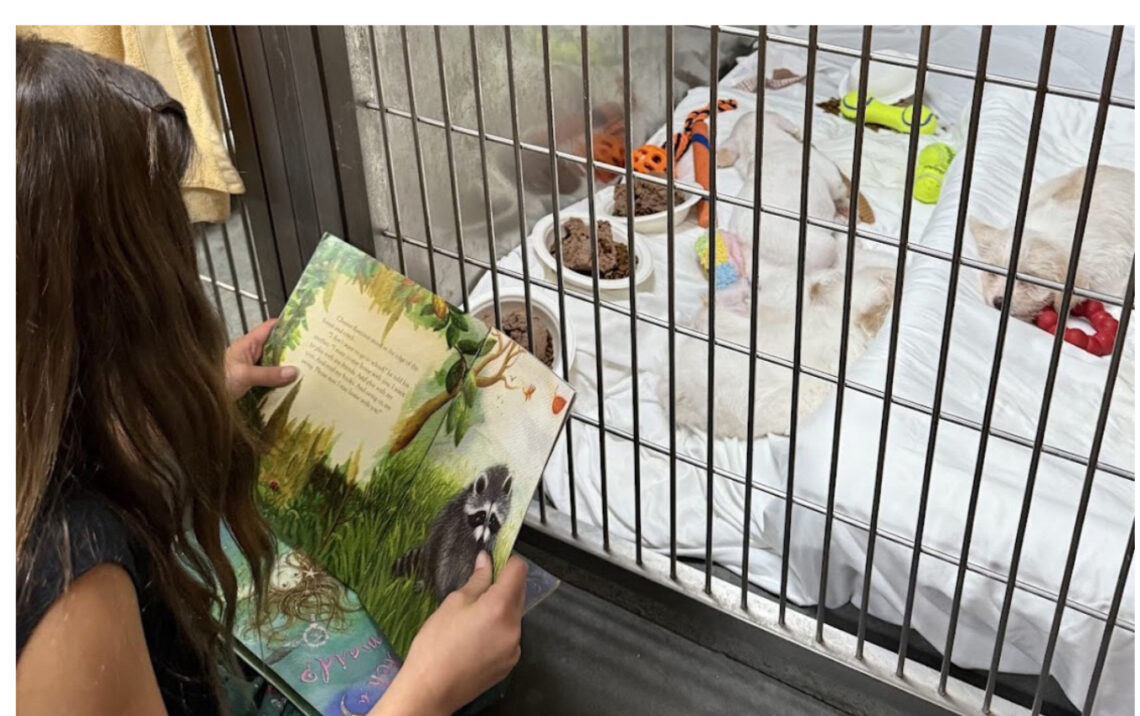
Imagine someone cozily curled up on the floor with a picture book, reading aloud to a patient, tail-wagging listener who neither speaks nor judges the reader. It is an experience that encourages self-confidence and emphasizes respecting animals and their space. Programs across the country, including in Santa Cruz County, are striving to help children become more confident readers and leaders.
How Can Pets Help With Reading?
UC Davis researchers suspect the primary answer is patience. They believe the pets’ nonjudgmental attention is what shifts children’s attitudes toward reading. The lead researcher put it simply: dogs “don’t judge the individual, aren’t grading the individual.”
One child in the study described the feeling this way: “I feel relaxed when I am reading to a dog.” More recent research points in the same direction. A 2026 study from Central Queensland University in Australia also found that reading-to-dog programs create a sense of emotional safety that helps children build confidence and overcome worry about making mistakes. In 2019, researchers at the University of British Columbia found that children spent more time reading and stuck with challenging passages longer when a dog was in the room, regardless of the dog’s breed or age.
Reading with pets can definitely begin at home. A few helpful tips apply for starting “book club” with the furry friends. Keep reading sessions short and relaxed to ensure the child does not feel pressured and that the family pet is comfortable. Let the child pick the book, and praise effort rather than perfection. It is safer to not leave a young child alone with an animal.
If the pet wanders off mid-chapter, that is okay! A cat that curls up nearby or a dog resting its chin on a child’s foot is still doing wonders for the child. For many children, the hardest part of reading is the fear of getting it wrong in front of someone. A pet removes that pressure. The animal does not mind a stumble, a pause, or a mispronounced word, and that freedom may be what encourages a child to pick up the next book. If there are no pets in the household, reading to plush animal toys can be just as impactful.
Local Programs In Santa Cruz
Visitors and families in Santa Cruz County have a few local options! The Santa Cruz Public Libraries have offered a program called Tales to Tails, in which trained therapy dogs serve as attentive, non-judgmental reading partners. Children ages 6 to 17 get individual appointments to sit with a therapy dog (accompanied by a volunteer) and read at the Downtown Santa Cruz Library on Church Street. Families can register by calling 831.427.7713. Another opportunity is Rescue Readers through the Santa Cruz SPCA. Interested participants can book a 30-minute reading session online with a small fee.
Lastly, the Santa Cruz County Animal Shelter hosts Bedtime Stories, a free one-hour long event during the Fall months where guests can read to cats, dogs, and even rabbits and guinea pigs! This event is held at the Santa Cruz location, 1001 Rodriguez St, Santa Cruz, not in Watsonville. Please check the organizations’ websites and social media for more event updates. It is important to note that these programs are for children accompanied by their guardians.
Every child who opens a book is learning more than words. When a child follows a character through a scary moment or a hard choice, they can practice empathy, patience, and perspective. These are the core of social-emotional learning, the skills that help kids name their feelings, manage them, and care for others.
Animals make that lesson even stronger. A dog or cat is a wonderful audience for a young reader because a pet never rushes, corrects, or frowns at a mistake. Children can relax, try again, and discover that learning can feel safe. That bond can naturally lead to curiosity and caring about animal welfare. A child who has read to a gentle shelter animal begins to wonder where they came from and what it needs. Stories about animals can spark real questions. What does a pet need to be healthy? Why do some animals lose their homes? How can we help?
Families can nurture all of this at home. Read together every day, choose books with animal characters, and visit your local shelter or library to meet the animals and the people who care for them. Raising readers is also raising kind-hearted neighbors, one page and one paw at a time.


