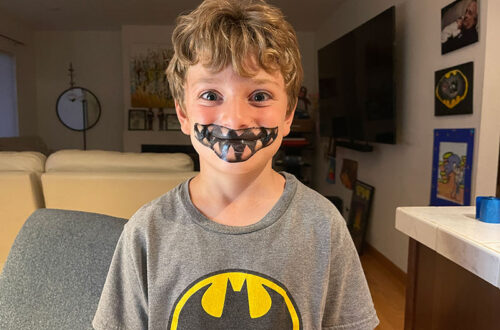
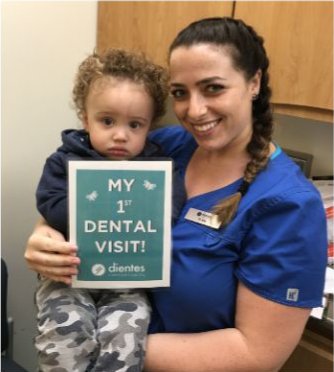

February is Children’s Dental Health Month, a perfect time to remind parents that healthy teeth support your child’s ability to eat, speak, learn, and feel confident. From baby’s first tooth to senior year of high school, oral health plays an important role in your child’s overall wellbeing. Here’s what to know at every stage.
Ages 0-2: Building Healthy Habits Early
Your baby’s first tooth is a big milestone – and it’s also time to start dental care.
Why It Matters
Baby teeth help your child chew, speak, and smile. They also hold space for adult teeth. Cavities at this age can cause pain, infection, trouble eating, and poor sleep.
What Parents Can Do
- Schedule the first dental visit by age 1 or when the first tooth appears.
- Brush twice a day with a rice-sized amount of fluoride toothpaste.
- Never put your baby to bed with a bottle of milk or formula (only water).
- Avoid sharing spoons or cups – cavity bacteria can spread from adults to babies.
Early dental visits help prevent cavities and help your child feel comfortable at the dentist. Did you know? Your Santa Cruz County-born child can earn money for going to the dentist ages 0-6: dientes.org/semillitas
Ages 3-5: Growing Smiles And Growing Independence
Preschoolers are learning to brush – but they still need your help.
Why It Matters
Cavities are the most common chronic childhood disease. At this age, untreated cavities can affect eating, sleep, and school readiness.
What Parents Can Do
- Brush twice a day with a pea-sized amount of fluoride toothpaste.
- Begin flossing when teeth touch.
- Visit the dentist every 6 months so that you have a dental home – they will need this to start school.
- Limit sugary snacks and drinks.
- Start helping your child understand why taking care of your teeth matters.
- Lead by example – your children are watching you closely.
Make brushing fun with songs, timers, or sticker charts!
Ages 6-9: Big Changes, Big Responsibility
This is when baby teeth fall out and adult teeth start coming in.
Why It Matters
New adult teeth need extra protection. Cavities at this age can affect permanent teeth for life.
What Parents Can Do
- Keep up twice-daily brushing and daily flossing.
- Ask your dentist about sealants to protect new molars.
- Schedule dental checkups every 6 months.
- Make sure backpacks include water instead of sugary drinks.
- Continue talking about the importance of a healthy smile – theirs and yours.
Good habits now will protect their smile for years to come.
Ages 10-14: Busy Schedules, Growing Smiles
Between school, sports, and activities, dental visits often get pushed aside – but this is a critical time.
Why It Matters
Pre-teens may need braces, are snacking more, and may not brush as well as they should. Cavities and gum problems can develop quickly.
What Parents Can Do
- Keep regular 6-month dental visits.
- Encourage brushing and flossing every day.
- Ask your dentist about sealants to protect the new molars that come in at this age.
- Use mouthguards for sports.
- Limit soda and sports drinks.
This is also when many kids stop seeing the dentist – staying consistent is key to catching problems before they become bigger.
Ages 15-18: Setting Up For Adult Health
Teens are becoming independent but still need support with dental care – especially in making and going to dentist appointments.
Why It Matters
Wisdom teeth, braces, and increased sugar intake raise the risk for cavities and gum disease. Healthy habits now protect their adult smile.
What Parents Can Do
- Keep regular dental checkups.
- Encourage daily brushing and flossing.
- Watch for signs of grinding, jaw pain, or wisdom tooth issues.
- Remind teens that their smile matters – for health and confidence.
Finding Dental Care With Medi-Cal / Denti-Cal
Dientes Community Dental Care is accepting new patients ages 0-18! Call 831.218.5341 to make an appointment. For other options, please visit: dental.dhcs.ca.gov/Members/Medi-Cal_Dental/Find_A_Dentist
Sheree Storm is Dientes’ Chief Strategy Officer and co-Chair of Oral Health Access Santa Cruz County. In her free time, she enjoys the beach with her husband and their dog, Xena.
David Brody is Executive Director of First 5 Santa Cruz County and co-Chair of Oral Health Access. He can often be found walking with his wife and dogs Coby and Auggie near the ocean.