

Finding the right preschool for your child can feel stressful. Parents want their children to be
happy and safe—and to enter kindergarten confident and prepared. Too often, families feel
they must choose between highly academic preschools or all-play, outdoor programs.
I understand those concerns, but it’s not an either-or choice.
Preschool is the ideal time to introduce reading, math, and science in the right way—while also
providing a rich, invigorating outdoor exploration program. Children naturally love to learn.
They simply need the right balance of structure, curriculum, and freedom.
Research shows that nearly 80% of a child’s adult intelligence develops between birth and age
four. These early years are a unique window, when children absorb language, patterns, and
cause-and-effect with remarkable ease. Preschool should honor that window—not with
worksheets or pressure, but with enjoyable, intentional readiness.
Learning Early—Without Losing Childhood
Preschoolers are naturally curious. They want to know how things work, why letters make
certain sounds, how numbers create patterns, and what happens when you mix, build, or test
something new.
Early literacy can include phonics, phonograms, sight words, CVC words, and real books. Early
math engages children in counting, grouping, measuring, and comparing. Science begins with
hands-on discovery—magnetism, tools, chemistry through mixing, botany in the garden, and
physics through building and motion.
Children love learning when it feels like discovery
What they don’t need is forced memorization or sitting still for long periods. Young children
learn best in short academic bursts—10 to 15 minutes—balanced with movement, outdoor
play, and exploration.
An ideal preschool rhythm might include a brief reading lesson, extended outdoor play, hands-
on science using water or sand, then returning indoors to learn a new letter sound or
phonogram. Learning becomes connected, physical, and memorable.
Why Class Size Matters
One of the most overlooked factors in preschool quality is class size.
Many daycare centers rely on large groups to remain profitable. This often means children
spend unnecessary time waiting, being herded, or redirected simply to maintain order. In large
classes, teachers can’t follow children’s questions or act on creative ideas in the moment.
Small classes change everything
When I started a preschool for my own daughters, I intentionally kept class sizes extremely
small—two children for two-year-olds, three for three-year-olds, and so on. Children do not
need ten or twelve peers in a room to learn how to socialize. In fact, large groups often
overwhelm young children and limit creativity.
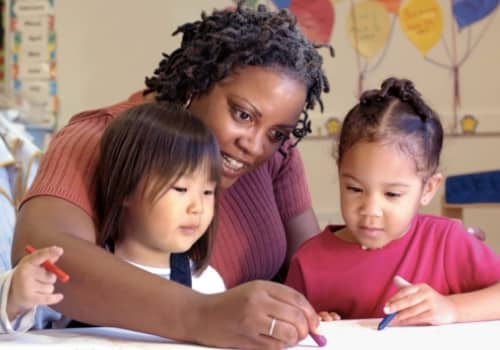
In small classes, teachers can individualize learning, follow curiosity in real time, and create
calm, focused environments where children thrive.
Confidence Comes From Competence
True confidence doesn’t come from constant praise. It comes from doing meaningful work
successfully.
In our preschool, children learned to read early, explored math and science daily, and also
danced, did gymnastics, swam, painted, sculpted, and participated in musical theater. Learning
wasn’t siloed—it was physical, creative, and social.
Both of my daughters learned to read by age three and entered kindergarten confident and
eager to learn. Decades later, they are accomplished professionals and leaders in their
fields—capable, curious, and confident women.
This isn’t about prestige. It’s about what happens when children are given strong foundations
early, in environments that balance academics with curiosity, courage, and confidence.
The Right Balance
The best preschools don’t choose between learning and play. They integrate:
– Early reading, math, and science readiness
– Exploration and experimentation
– Outdoor play and physical development
– Communication, creativity, and collaboration
Children are eager to learn. When we respect their intelligence and provide the right balance,
we don’t take away childhood—we strengthen it.
What to Look for When Touring a Preschool
Ask yourself:
– Are academic lessons short, engaging, and age-appropriate?
– Do children move freely between learning and play?
– What types of outdoor and indoor play activities are offered?
– Are teachers responding to children’s questions and ideas?
– Do children receive guidance while working with hands-on science materials?
– Do children seem calm, confident, and curious?
Watch for red flags:
– Large class sizes with excessive waiting
– Children sitting for long periods
– Busy work replacing exploration
– One-size-fits-all instruction
– Children disengaged or bored
A great preschool balances structure and freedom, academics and play—while honoring how
young children truly learn.

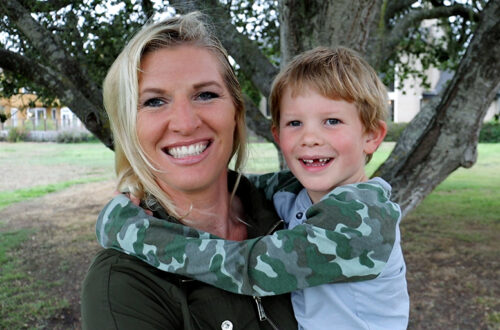
Susan Tatsui-D’Arcy is the founder of Merit Academy (one-on-one classes and Merit Educational Consultants (college and educational advisory). She has written books on projects, free child care, education, and parenting. Susan hosts TEDxMeritAcademy for students to present their innovative projects and solutions. In 2019, she was California Mother of the Year.