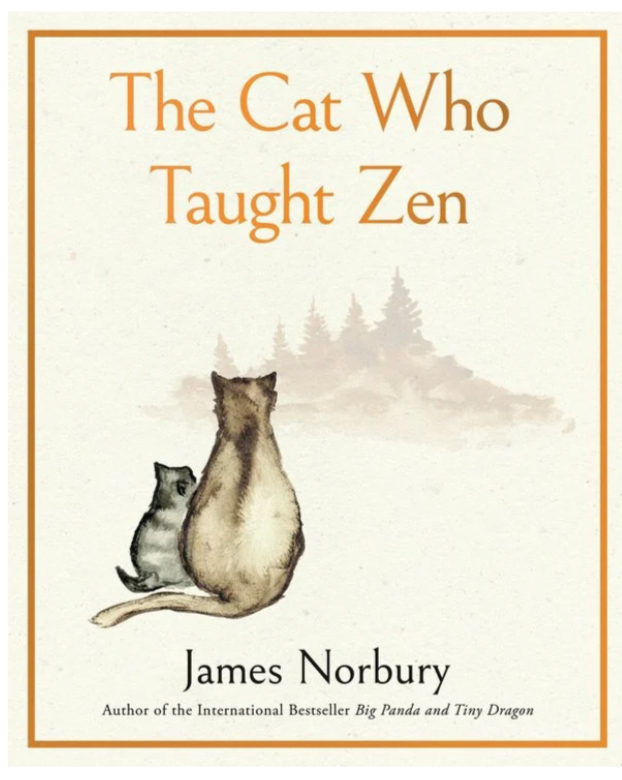

James Norbury has a gift for wrapping big ideas inside simple animal stories, and The Cat Who Taught Zen may be one of his most appealing. Published in 2023, the illustrated woodland tale has remained popular with readers of all ages. Like Big Panda & Tiny Dragon, which we reviewed not long ago, it is sweet, endearing and thoughtful, with one level of pleasure for children and another for the grown-ups reading beside them.
The story begins with an old cat who believes he is already quite wise. Then he hears of an ancient pine tree, hidden deep within a maple forest, beneath which infinite wisdom may be found. That is enough to send him out of the city and into the wild.
His journey becomes a string of encounters with animals who are carrying their own troubles. A hare, a magpie, a confused wolf cub, a restless monkey, a weary tortoise and an angry tiger each give the cat an opportunity to offer advice. Just as often, they have something to teach him.
The monkey cannot quiet her racing thoughts. The tortoise has grown so tired of life that he thinks constantly about death. The tiger is trapped in anger. A covetous crow wants what others have, and the wolf cub is struggling to understand who he is. These are large subjects, but Norbury handles them in small, simple conversations. Young readers can easily follow the story, while adults may find themselves lingering over certain pages.
The cat’s wisdom comes mostly through short stories and thoughtful questions. He does not lecture. He listens, considers and sometimes admits that he does not have a complete answer. This gives the book a calm, conversational rhythm. The Zen lessons concern fear, desire, patience, identity, anger and the habit of searching everywhere for something that may already be close at hand.
The most important disruption arrives in the form of a lively kitten. The kitten is curious, playful and not especially impressed by the cat’s solemn quest. She pulls him into the present moment simply by being fully alive in it. By the time the cat reaches the ancient pine, his understanding of the journey has changed.
A cat is an apt messenger for Zen. Cats can sit still for an hour, then spring into action like a kung fu master. They are famously independent, observant and perfectly content to occupy a patch of sunlight. They also have a way of making human urgency look faintly ridiculous.
Zen itself should feel especially at home in Santa Cruz, where meditation centers, yoga studios, forest trails and people mindfully seeking a better way to live are all part of the local landscape. Norbury’s version is not religious instruction. It is practical wisdom offered through a forest fable.
Norbury’s interest in Zen and spirituality grew from years of personal reading and from his volunteer work with the Samaritans, where he encountered people in pain and crisis.
His art developed in much the same self-directed way. A lifelong drawer and largely self-taught illustrator, he works in pen, ink, pencil and watercolor, often allowing small accidents of line and paint to remain part of the picture.
The watercolor and ink illustrations are as important as the words. Nearly every page carries artwork, ranging from spare ink drawings to full watercolor scenes in subdued woodland colors. Norbury gives each creature a distinct personality without making them overly cute. The animals move through misty woods, moonlit clearings and autumn leaves, while open skies and broad areas of white space create the book’s reflective mood. Pages sometimes hold only a sentence or two, allowing the pictures and pauses to do their work.
The Cat Who Taught Zen would make a lovely read-aloud book for older children, especially those beginning to wrestle with worry, anger or questions about who they are. It also works as a gift for an adult who could use a little peace, perspective and purring philosophy.