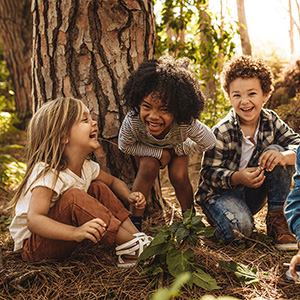
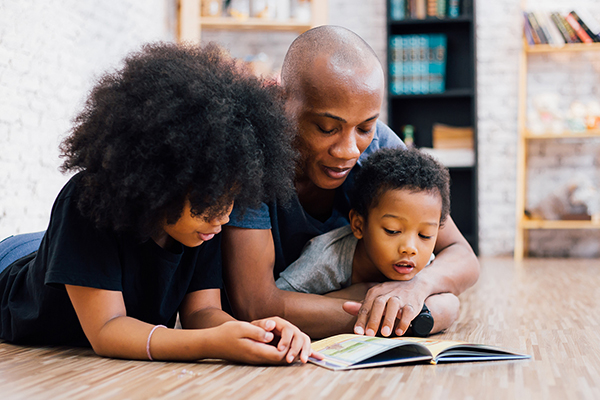


There is an old saying that has been around for generations: it takes a village to raise a child.
The older I get, the more I believe it is true. But over the years, I have come to see those words a little differently.
I don’t think it simply takes a village to raise a child.
I think it takes a village to support a family.
And when a family feels supported, children feel it too.
For most of my life, I have been trying to understand how children learn, adapt, and develop. Part of that journey began as a little girl with an IEP who often felt overwhelmed in school. I remember sitting in meetings while adults discussed accommodations, goals, and my future. During one of those meetings, my dad said something that has stayed with me for decades.
“All I care about is my daughter’s confidence, and if that’s good, you won’t hear from me.”
At the time, I didn’t fully understand what he meant.
Today, I do.
He wasn’t dismissing academics. He understood that confidence matters. A child who feels believed in, encouraged, and valued approaches challenges differently. Looking back, I think that simple statement shaped the way I would spend the rest of my life thinking about children and families.
That belief eventually led me to earn a Master’s degree in Human Development. I wanted to understand what helps children succeed and what helps families stay strong. I studied theories, research, and child development across the lifespan. But one of my greatest teachers wasn’t graduate school.
It was becoming a homeschool mom.
Homeschooling taught me that some of the most important lessons happen outside of a curriculum. Some of the most meaningful growth happened while baking in the kitchen, exploring our beautiful beaches and redwoods, traveling and learning about other cultures, reading together, learning about money and how to make thoughtful financial decisions, staying true to our values, playing in mixed-age groups of children, working in the garden, talking around the dinner table, and simply doing life together.
No rushing. Just being in connection. Those moments weren’t separate from learning that happened in a classroom or school. They were learning.
They built confidence, communication, problem solving, responsibility, and relationships. They reminded me that development is woven into everyday life.
Over the years, my work has allowed me to walk alongside many incredible children and families. I’ve sat in living rooms, classrooms, and IEP meetings. I’ve celebrated first friendships, new words, developed speech, growing confidence, and moments that might seem small to someone else but meant everything to a family.
I’ve also sat with parents carrying responsibilities that few people ever see. People often ask, “What does this child need?”
It’s an important question. Some children need therapy. Some need accommodations. Some need a different educational environment.
Some need specialized support.
I believe deeply in those resources, and I have seen how life changing they can be. But somewhere along the way, I started asking another question.
What does this family need?
Because children don’t grow up inside appointments. They grow up inside families. And families grow inside communities.
The greatest progress I’ve witnessed rarely happened because one person had all the answers. It happened when the people surrounding a child worked together.
A parent who felt encouraged. A teacher who saw strengths. A therapist who partnered with the family. Grandparents who stayed involved. Friends who made room. Neighbors who knew a child’s name. No one person carried the entire journey.
Together, they became the village.
As someone who supports many families raising children with Autism and ADHD, I believe this becomes even more important. These parents are often coordinating services, advocating at school, learning new strategies, and celebrating victories that others may never notice.
If I were raising a child with profound Autism or significant ADHD today, one of my first priorities would absolutely be finding quality support and services. But right alongside that, I would intentionally build a village around my family.
Not because therapy isn’t important. It is. Not because education isn’t important. It absolutely is. But because I don’t believe one person changes a child’s life. I believe a network of caring people can make an incredible difference.
As beautiful as a village can be, I’ve also learned that building one requires wisdom. Not every opinion deserves equal weight.
As parents, we hear advice from every direction. Sometimes it’s helpful. Sometimes it’s well intentioned but doesn’t fit our child or our family. Sometimes it leaves us questioning ourselves. Those voices may come from social media, friends, extended family members, or people who genuinely care but see the situation differently.
One of the healthiest things we can do is protect the emotional climate of our home.
Building a village doesn’t mean giving everyone a vote in how we raise our children. It means intentionally surrounding ourselves with people who strengthen our family.
People who encourage instead of criticize. People who ask questions before making assumptions. People who celebrate progress instead of comparison. People who remind us that every child develops on their own timeline.
Our children often borrow our confidence before they build their own. If we allow every outside opinion to determine the peace within our home, our family can begin to feel uncertain. One of the greatest gifts we can give our children is being grounded enough to learn from others, grateful enough to accept help, and confident enough to trust what is right for our family.
When I look around Santa Cruz County, I don’t see a community lacking heart. I see caring teachers, dedicated professionals, grandparents who want to help, coaches who invest in children, churches that welcome families, local businesses that support their communities, and neighbors who simply need an invitation to know one another.
The pieces are already here.
What if we became more intentional about bringing them together?
What if supporting families became one of the greatest ways to support children?
My life’s work has never simply been about helping a child reach the next milestone. It has always been about supporting the whole family.
Because when parents feel encouraged, siblings feel included, grandparents feel valued, and communities come alongside one another, families become stronger, more connected, and better equipped to help every child develop strong roots.
Maybe that’s what “it takes a village” has meant all along.
Not that parents aren’t enough. But that they were never meant to do it alone. And perhaps the greatest gift we can give the next generation is creating spaces, opportunities, and supportive communities where children and families can thrive together.
Perhaps it’s choosing to become the village for one another.