
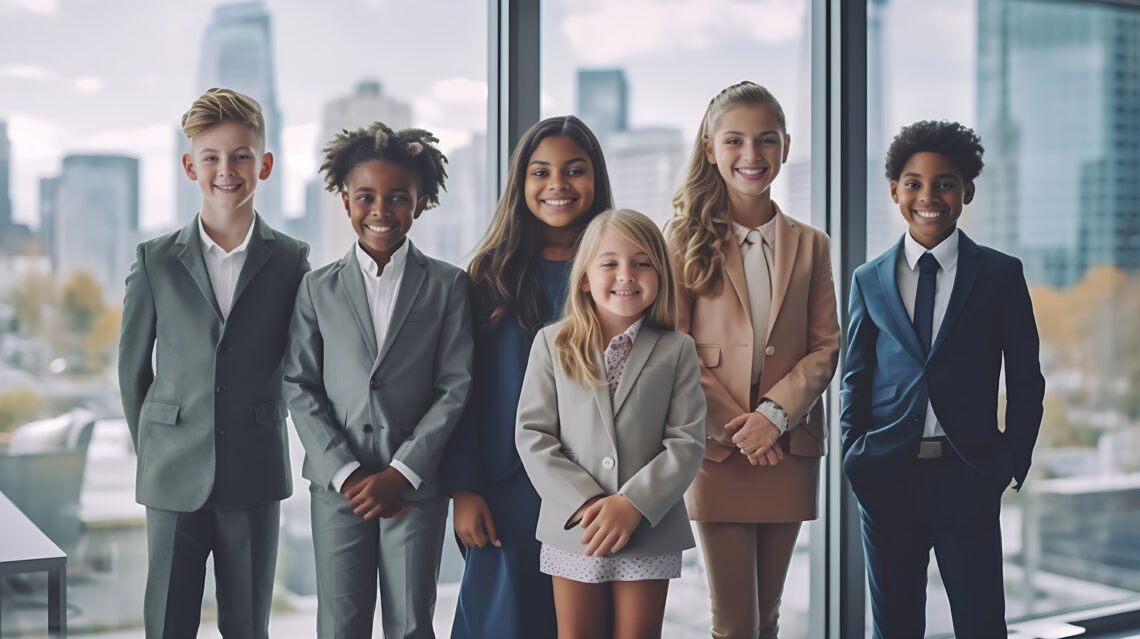
Children are intelligent and capable and are so deserving of love, safety, compassion, respect, and dignity. They have big hearts, brilliant minds, creative ideas, and amazing capabilities. With the facts at their fingertips and access to global communication, they possess a great deal of power to bring about positive change. Just imagine that at the age of 15, renowned climate/social change activist Greta Thunberg merely watched a video, and what she saw inspired her to take action.
All that said, life is still very challenging for children. Mental health issues have resulted from the pandemic, education no longer guarantees good jobs, media-based technology distracts and disconnects us, drugs are more prevalent, harmful, and accessible than ever, our governmental system of checks and balances is ineffectual, and violence pervades many areas of our lives. Couple all that with systemic oppression, and not surprisingly, many young people are experiencing a sense of hopelessness, powerlessness, disenfranchisement, and discouragement.
Our country has never realized its stated goal of “liberty and justice for all” because it has never eliminated power disparities, privilege, and oppression. Racism, sexism, classism, adultism, ableism, ageism, and colonialism continue to plague our society in myriad ways, hindering our ability to effect positive social change.
Adultism is particularly pernicious as young people remain undervalued, underestimated, and, oftentimes, under the full control of the adults around them. Further, we’ve been conditioned to see children as immature, impulsive, impressionable, and ineffective.
That’s a bit ironic because we do acknowledge their academic achievements and help with chores, and when we speak of their purpose, we do envision them becoming happy and successful adults. What we also do sometimes, though, is unwittingly place greater emphasis on who children will become than on who they already are, thus disregarding their untapped, present-day leadership potential.
Positive Discipline, an approach to parenting, teaching, and leadership, not only emphasizes mutual respect, responsibility, and problem-solving, it empowers children to be today’s leaders and changemakers.
EQUALITY AND RESPECT FOR ALL INDIVIDUAL
Positive Discipline rejects punishment and the fact that punishment is exacted disproportionately on marginalized social groups. Instead, it encourages treating every individual—especially children—with respect and dignity. Doing so promotes a social environment in which all people are valued. Further, Positive Discipline emphasizes children’s voices and perspectives as it helps adults learn to model both respectful behavior and democratic leadership, all of which promotes social justice.
ENCOURAGING EMPATHY AND EMOTIONAL INTELLIGENCE
Fostering emotional literacy and empathy, Positive Discipline helps children understand and manage their emotions in healthy ways. Emotional intelligence is key to the creation of a compassionate and inclusive culture. Conflict resolution and cooperation are essential elements of a just society.
CHALLENGING POWER IMBALANCES
Traditional discipline often reinforces a hierarchical, authoritarian structure with adults holding absolute power over children. Positive Discipline promotes an authoritative model for adults to practice which allows parents to enlist children’s help in identifying solutions and thus challenges traditional power dynamics as it teaches children the importance of fairness, democracy, and equality.
Moreover, it aims to empower children to make responsible choices and shows children how to take responsibility for their actions, think critically, and solve problems. That, in turn, helps break cycles of oppression and inequality.
ADDRESSING ROOT CAUSES OF MISBEHAVIOR
Instead of recommending punishment to address misbehavior, Positive Discipline focuses on discovering the beliefs behind the behavior.
This could include unmet needs such as attention, connection, or support, particularly for children from marginalized communities who may face systemic challenges.
By addressing these underlying needs, Positive Discipline works to ensure that all children have access to the resources they need to thrive. Further, Positive Discipline encourages teachers and parents to be culturally aware and sensitive to the unique experiences of each child.
By recognizing and addressing issues related to race, socioeconomic status, and other social factors, it seeks to create an environment where all children can succeed, regardless of their background.
PROMOTING SOCIAL RESPONSIBILITY AND INCLUSION
Positive Discipline teaches children to be responsible for themselves and their communities. By promoting cooperative learning and shared responsibility, children learn the importance of inclusion, equity, collaboration, and cooperation, thus encouraging children to be advocates for social justice.
Positive Discipline also helps challenge stereotypes that can be perpetuated through traditional discipline methods, especially given children from marginalized communities are disproportionately disciplined. We all deserve to be treated and valued as individuals.
BUILDING A JUST AND COMPASSIONATE SOCIETY
Teaching children responsibility and problem-solving, Positive Discipline fosters fairness, equality, and compassion—key principles of social justice. Children who are taught to advocate for themselves and others and resist injustice feel encouraged to make positive contributions and can be active participants in making their communities more inclusive and just.
CREATING EQUITABLE OPPORTUNITIES FOR EVERYONE
Positive Discipline encourages adults to support all children in achieving their full potential, regardless of their background. For children in historically marginalized and/or underrepresented communities, this can help level the playing field by giving them the tools they need to navigate a world that has yet to treat them fairly.
CONCLUSION
Positive Discipline promotes social justice by creating environments that value and respect every individual, recognizing the importance of emotional intelligence, and working to address systemic issues that contribute to inequality.
Teaching children empathy, cooperation, and inclusion while encouraging their participation and nurturing their capabilities helps us parents/children work together to dismantle oppressive systems and thus co-create a better world.